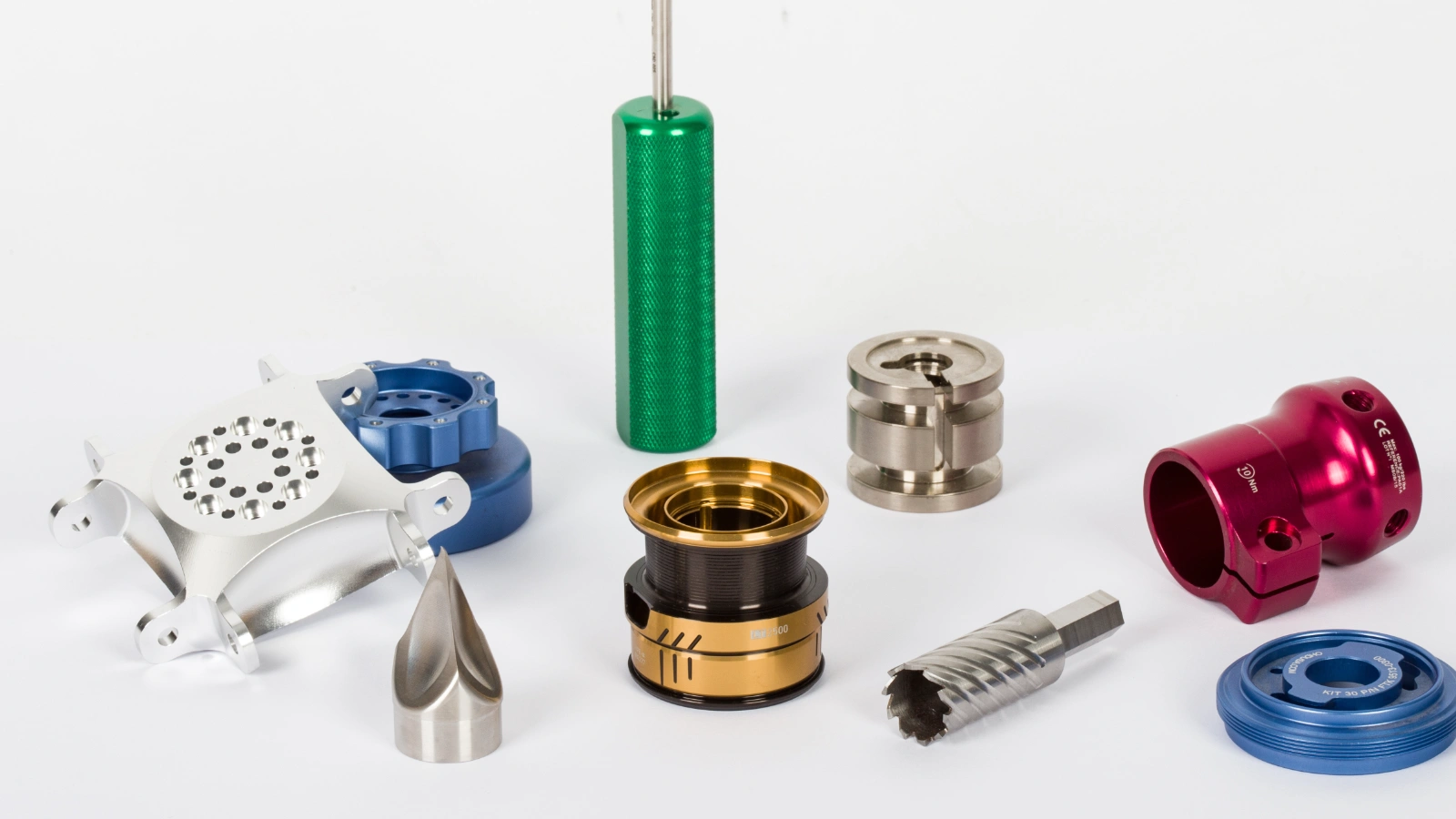
Type II and Type III hard-coat anodizing for aluminium parts. Increases surface hardness to 60–70 HRC, improves corrosion resistance, and adds colour.
Anodizing is an electrochemical process that grows a controlled oxide layer on the aluminium surface. The part is submerged in a sulphuric acid bath and connected as the anode in an electrical circuit — oxygen ions from the electrolyte react with the aluminium to form aluminium oxide (Al₂O₃) at the surface.
The resulting oxide layer is integral to the metal (not a coating on top), making it extremely durable. Dye molecules can be absorbed into the porous oxide before sealing to produce colours.
The most common anodizing process. Produces a clear or coloured oxide layer ideal for consumer products, electronics housings, and architectural parts.
Thicker, denser oxide layer grown at lower temperature. Used in aerospace, defence, and heavy wear applications where surface hardness is critical.
Colours are dyed into the porous oxide before sealing. Type III is available in clear (natural grey-black) and black only.
Anodizing is only suitable for aluminium. Alloy selection affects colour uniformity and hardness achievable.
The oxide layer grows ~50% inward and ~50% outward. Type II adds ~5 µm per face. Type III adds ~25 µm per face. Account for this on mating fits and precision bores — specify tolerances before anodizing.
Threads, precision bores, and contact surfaces must be masked. Anodizing inside threads reduces clearance — M4 and smaller threads are often best masked. Specify masked areas in the order notes.
Mix of alloys in one bath will show colour variation. If colour matching across multiple parts is critical, ensure all parts are the same alloy and temper. Send alloy certification if available.
Pre-anodizing surface finish is visible after anodizing — machining marks, scratches, and tool paths show through the clear oxide. Specify bead blast or mechanical polish if a uniform appearance is required.
Add anodizing to your order at checkout, or send us bare aluminium parts for standalone finishing.